
Ads that bring buyers, flows that bring them back
Meta, TikTok and Snapchat campaigns plus cart recovery and post-purchase flows, run as one system.

One system, not a list of services
Every channel we run sends its leads into the same GoHighLevel pipeline, where the AI answers, follows up and books. That is what you buy, whichever page you started on.
What we promise, in writing
Owners tell us the last vendor locked them in, kept their phone number, or handed the account to a junior. So we put these four in every proposal.
No auto-renew, no exit fees
Setup is a fixed project. Management is month to month after that. Cancel with 30 days notice and nothing renews behind your back.
You own everything
The GoHighLevel sub-account, the phone numbers, the ad accounts, the pixel and every lead stay in your name. Leave, and you keep them.
Reported by booked appointments
Not impressions, not ROAS screenshots. You see calls answered, appointments booked and shows, every week, in your own dashboard.
Built by the people you talk to
No junior handed 14 accounts. The engineers who scope your system on the call are the ones who build it and answer your messages.
Why do eCommerce brands plateau on paid social?
Brands plateau because they treat ads and follow-up as separate jobs. The ad team pushes for a lower cost per purchase while carts are abandoned, first-time buyers never hear from the brand again, and nobody asks for the review or the user-generated content that would make the next ad cheaper.
- Meta feels like burning money: a $5 to $7 CPA for two days, then $40 to $50 overnight with nothing changed.
- Abandoned-checkout opens fell from 40 percent to 15, and bot checkouts are poisoning your flows and deliverability.
- Support emails take until evening, Instagram DMs sit in an inbox nobody owns, and a slow reply on TikTok Shop is a lost sale.
- The last agency took $5,000 a month, the founder vanished, and a junior with fourteen other clients sent AI-written reports.
Which eCommerce problems does the system fix?
| Problem | System we build | What changes |
|---|---|---|
| Rising cost per purchase | Structured creative testing on Meta, TikTok and Snapchat with new angles every cycle | Fresh winners replace tired ads before performance slides |
| Abandoned carts | Abandoned-cart sequence by SMS, WhatsApp and email with product reminder and a clear path back | Recovered orders from shoppers who were nearly there |
| One-time buyers | Post-purchase flow with delivery updates, usage tips, cross-sell and replenishment reminders | Repeat orders from customers you already paid to acquire |
| Few reviews and no UGC | Review request timed to delivery plus a UGC ask with an easy upload link | Social proof for product pages and raw material for ads |
| Customer questions clog the inbox | AI chat agent on the site and in WhatsApp for order status, sizing, shipping and returns | Faster answers and fewer lost sales at the question stage |
| Ads, email, SMS and support in different tools | One customer record and one inbox in GoHighLevel with source tracking | The team sees the whole customer journey in one place |
How do we keep Meta, TikTok and Snapchat ads from burning out?
We run a testing cadence rather than a set-and-forget campaign. Each cycle introduces new hooks, formats and angles, keeps the ones that perform, and retires the ones that do not. UGC-style video, founder-to-camera clips, product demos and static offers all get their turn, because different platforms reward different formats.
TikTok and Snapchat matter more for brands selling to younger audiences, where those platforms carry real reach. Meta remains the workhorse for most US brands. We choose the mix by audience and product, not by habit, and we tell you when a platform is not worth your budget.
- New creative angles every cycle with a clear test-and-retire rule
- UGC-style video, Spark Ads on TikTok and AR-friendly formats on Snapchat
- Pixel and conversions API setup on every platform so results are measured properly
- Retargeting for viewers, cart abandoners and past buyers
- Creative briefs you can hand to creators or produce in-house
What does an abandoned-cart and post-purchase system look like on GoHighLevel?
The abandoned-cart flow triggers when a shopper leaves items behind, reminds them of the product on the channel they prefer, answers the common objection, and makes it easy to return to checkout. The sequence stops the moment they buy. It runs on SMS, WhatsApp and email depending on the market and the consent the shopper gave.
How do we handle consent for SMS, WhatsApp and email?
We collect consent at checkout and sign-up and honor it per channel. US brands get TCPA-aware SMS consent and quiet-hours sending. Every contact record shows what they agreed to, and a stop reply ends messaging on that channel immediately.
How does a brand get started with us?
Ads and owned channels are built together so nothing is optimized in isolation.
Strategy call
We review current ad accounts, store data, email and SMS flows, and agree where the biggest leak is.
Measurement and flows
We fix pixels and conversions API, connect the store to GoHighLevel, and build the cart, post-purchase and review flows.
Creative system
We set the testing cadence, write the first briefs and launch on the platforms that fit your audience.
Launch and iterate
Weekly creative reviews and flow tuning during the first cycles, with a shared dashboard.
Scale
Winning angles get budget, owned channels compound, and we expand to new platforms or markets when the numbers support it.
Which services do eCommerce brands combine?
Paid social to acquire, automation to retain, web development to convert.
Meta Ads
Creative testing, retargeting and conversions API on Facebook and Instagram.
Learn more →
TikTok Ads
Spark Ads and UGC-style video for younger audiences.
Learn more →
Snapchat Ads
Snap Pixel, AR formats and younger-audience reach for product brands.
Learn more →
AI Automation
Cart recovery, post-purchase, review and UGC flows on GoHighLevel.
Learn more →Where do we work with eCommerce brands?
In the USA we work with direct-to-consumer brands that need disciplined creative testing on Meta and TikTok and SMS flows that respect consent rules.
What should you read to understand it properly?
Short, sourced guides. Each answers one question and links to the next.
Guides in this section
Definitions, costs and rules, written to be read in five minutes.
- Abandoned cart recovery for ecommerce stores Abandoned cart recovery for online stores is a timed sequence of email, SMS and WhatsApp messages that brings a shopper back to the cart the
- AI chat agent for ecommerce stores An AI chat agent for ecommerce stores is a website and WhatsApp assistant that answers order status, sizing and returns questions from the s
- Meta ads for ecommerce stores Meta ads for online stores are Facebook and Instagram campaigns that sell products directly through the Shopify catalog, tested creative by
- Post-purchase flows that raise repeat orders Post-purchase flows for ecommerce stores are the messages a customer receives after paying: order and delivery updates, care instructions, a
- What a Shopify brand’s weekly marketing report should show A weekly marketing report for a Shopify brand shows spend and return by ad platform, orders recovered by the cart and win-back flows, the re
- Product review automation for Shopify stores Product review automation for Shopify stores is a sequence that asks a customer for a product review only after the order is delivered, rout
- TikTok ads for ecommerce stores TikTok ads for online stores are short vertical videos, usually creator or customer content boosted as Spark Ads, that send shoppers to the
- WhatsApp automation for ecommerce stores WhatsApp automation for online stores sends order confirmations, shipping updates and reorder prompts through Meta-approved templates, answe
- Win-back campaigns for lapsed ecommerce customers Win-back campaigns for lapsed ecommerce customers are timed sequences sent to people who bought before and stopped, segmented by how long ag
What results have ecommerce brands had with this system?
Shopify dashboards, year on year, shared with the store owners’ permission. Store names and locations are hidden.

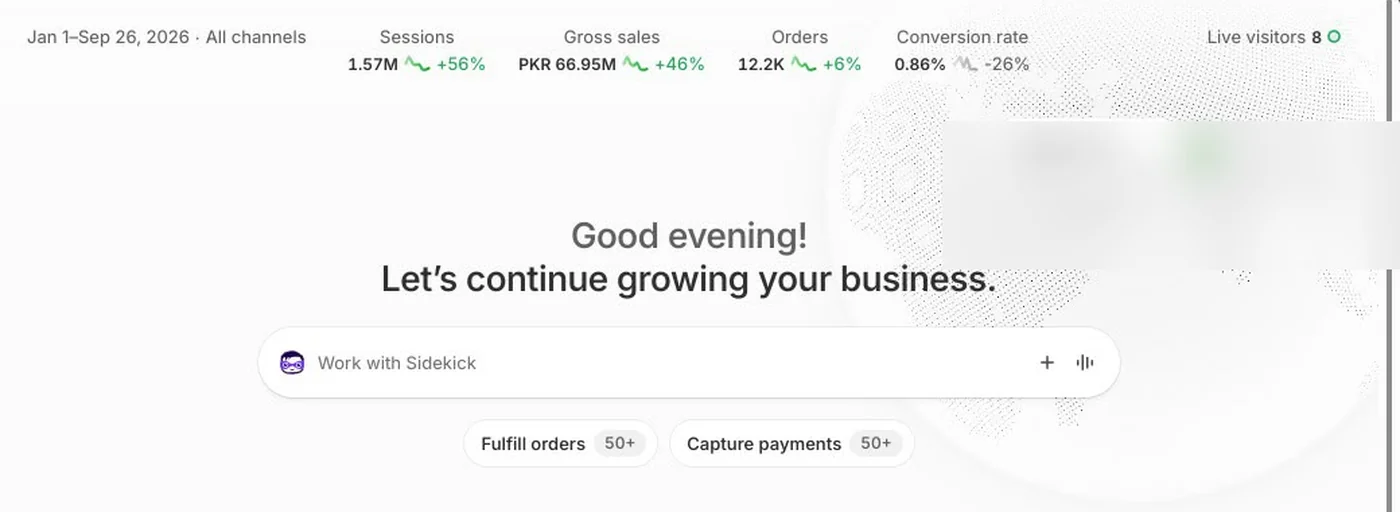
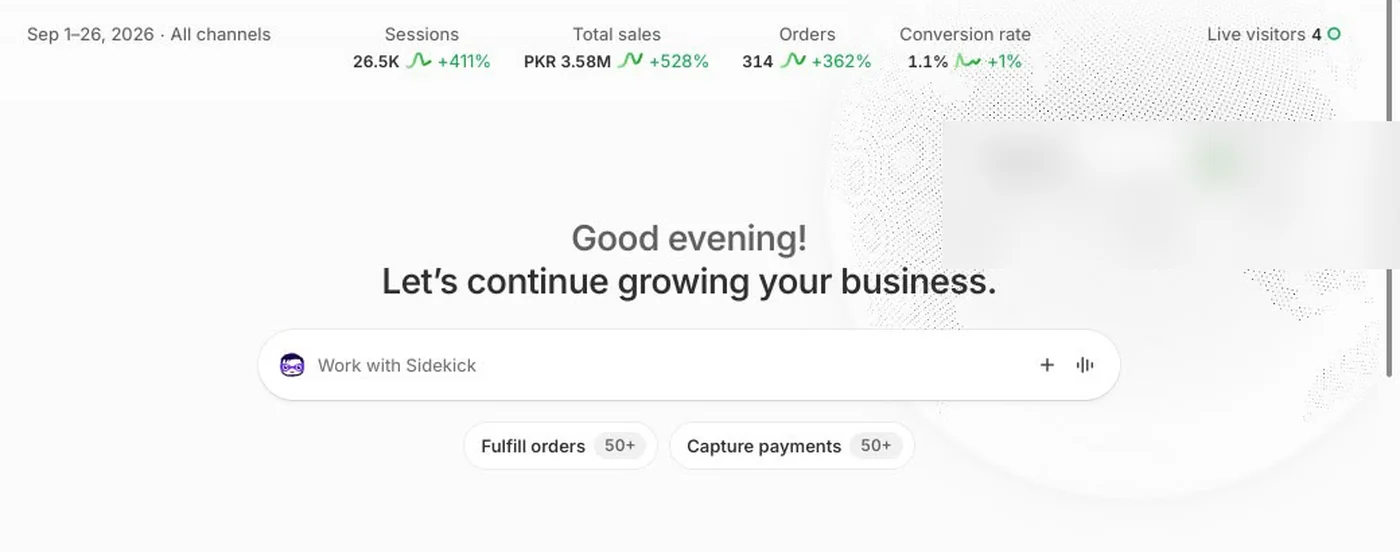
These are specific stores in specific months. Results depend on product, margin, budget and follow-through, and are not a promise of what your store will do.
Questions eCommerce founders ask us
Which store platforms do you work with?
Shopify, WooCommerce and most modern platforms. We connect order and cart events to GoHighLevel through native integrations or webhooks, so the flows trigger from real store activity rather than a manual export. We confirm your platform and the connection method on the strategy call.
Do we need to be on TikTok and Snapchat as well as Meta?
Not always. Meta is the starting point for most US brands. TikTok earns its place when the product suits short video and the audience is younger. Snapchat is worth testing for younger audiences and for brands with strong visual products. We recommend a mix based on your audience and tell you plainly when a platform is not worth it.
Who produces the creative?
We write the briefs and test plan, and we can produce static and simple video in-house. For UGC-style content we either brief your customers through the UGC flow or coordinate creators you choose. You keep ownership of everything produced.
Will the automation flows conflict with our current email tool?
We map every flow so nothing sends twice. Most brands either move email and SMS into GoHighLevel to get one customer record, or keep their email tool for newsletters and let GoHighLevel handle triggered flows. Either works; we just need a clear split.
How do you measure success?
Cost per purchase and return on ad spend for paid channels, recovered cart revenue and repeat purchase rate for owned channels, and blended customer acquisition cost across everything. You see all of it in one dashboard and we review it together each month.
Can the AI chat agent handle support questions?
Yes for the questions that repeat: order status, shipping times, sizing, returns and product details. It pulls from your policies and product data, and hands anything unusual to your team with the full conversation attached. Customers get an instant answer instead of waiting for an email reply.
How long before we see results?
Measurement fixes and owned-channel flows start working within the first weeks because they act on traffic you already have. Paid creative testing needs a few cycles to find winners. We set expectations on the strategy call based on your current volume and share progress weekly.
Is this just another $10,000-a-month agency?
No. Ads and flows are scoped as a fixed project first, then month to month with 30 days notice. You own the ad account, the pixel and the customer data. And you are reported on cost per order and recovered revenue, not on impressions or a ROAS screenshot from a good Tuesday.
Will cart recovery and WhatsApp follow-up annoy customers or get us flagged?
Not if it is built properly. Bot checkouts are filtered before they enter any flow, consent is captured per channel for US buyers, and the sequence stops the moment someone buys or replies. Founders who saw open rates collapse usually had bot traffic and no suppression, which is the first thing we fix.
Make every acquired customer worth more
Book a free strategy call. We will review your ad accounts and owned flows and show you where the next gain is.
Book a Free Strategy Call