
Ruby vs an AI receptionist for contractors
Ruby bills by the minute, which makes it the easiest live service to compare with AI on a contractor’s calls. Here’s what each one does on a plumbing or HVAC company’s phone, the October 2026 prices, and the July bill for three shop sizes.
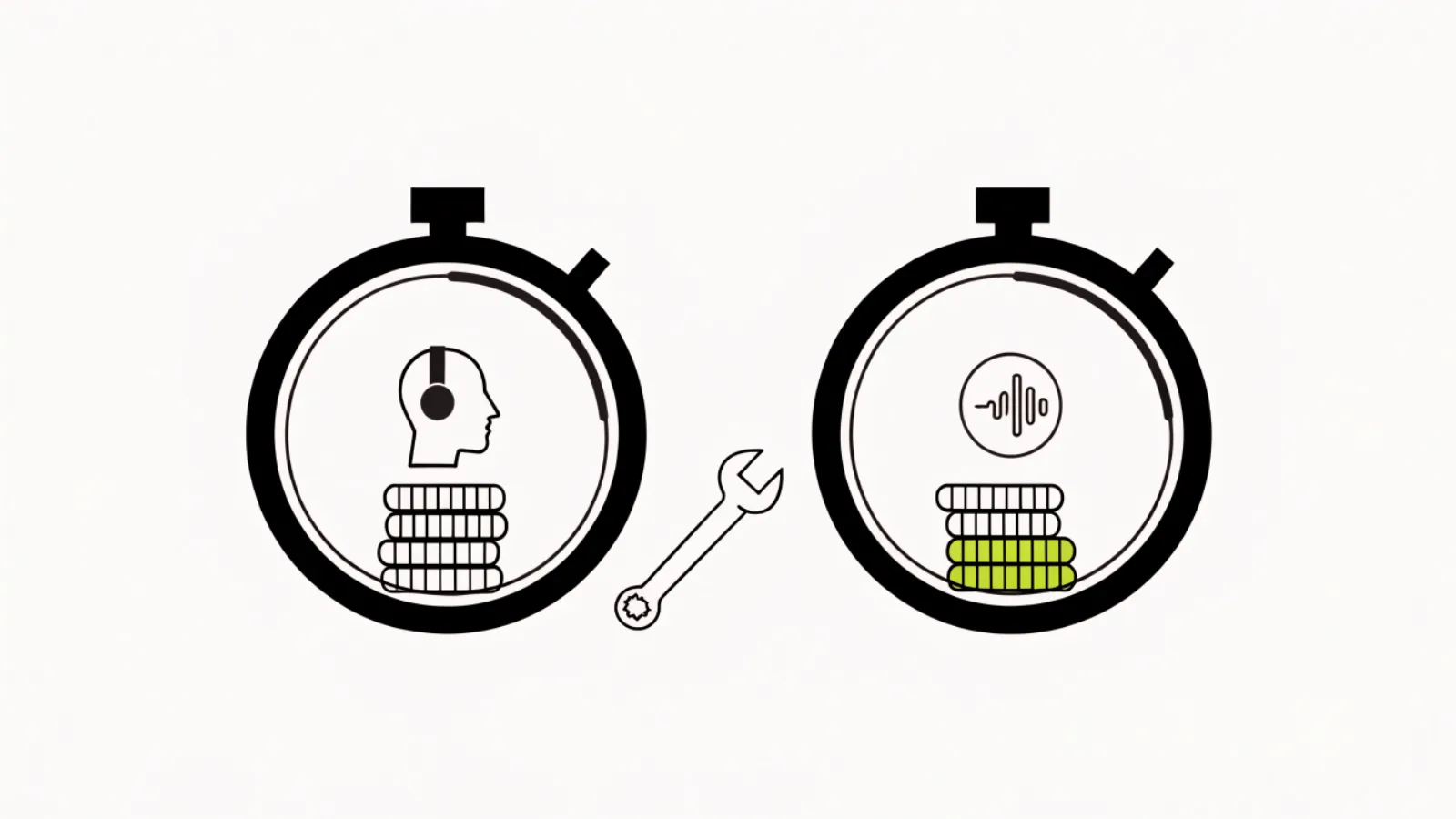
Ruby or an AI receptionist: which should a contractor pick?
Ruby’s starter plan is $250 a month for 50 minutes, which at three minutes a call is about 16 calls; the 500-minute plan is $1,725. A per-minute AI receptionist is $49–$99 with 100–200 minutes and $0.25–$0.50 after, and it books into your calendar. For a solo electrician at 120 calls Ruby runs about $1,960 against roughly $150 on AI; for shops under 20 calls a month, or trades where a human first contact closes a $5,000+ job, Ruby’s receptionists are a fair choice.
| Ruby | AI receptionist (per-minute plan, or a GoHighLevel build) | |
|---|---|---|
| Entry price (Oct 2026) | $250/mo for 50 minutes; plans up to $1,725 for 500 minutes | $49–$99/mo with 100–200 minutes; GoHighLevel build: per-minute usage, no seat fee |
| Effective per-minute rate | About $4.90 on the starter plan; lower on larger plans | $0.25–$0.50 |
| Who answers | Live US receptionists; Ruby also offers chat | AI, tuned to your call sheet |
| Books into your calendar | Appointment scheduling is offered; confirm whether it lands in your job software | Yes, into your calendar or job software by zone |
| Knows your prices and service area | What’s on the script | What you load, with a no-quote rule |
| After-hours | 24/7 on plans | 24/7, no surcharge |
| Angry customer, warranty dispute | Operators handle it well | Hands off to you or a live fallback |
| Setup | Script and a few days | A few hours plus a tuning week |
| Billing unit | Minutes, in increments; ask about rounding | Minutes, usually 6–30 second increments |
When is Ruby the better choice?
- Very low volume: under 20 calls a month, the $250 plan is simple and human.
- Big tickets: $5,000+ first calls where a receptionist’s warmth measurably raises close rate.
- A customer base that wants a person and will wait for one.
- You want chat and phone from one vendor with no tuning on your side.
When is an AI receptionist the better choice?
- Volume. Over 60–80 calls a month, per-call pricing stops making sense; at 300 calls in a summer month the live-service overage alone passes what an AI plan costs for the year.
- Booking. You want the caller booked into tomorrow’s 8–10 window, not a message that says they called.
- After-hours and overflow. The AI’s marginal cost of a 2 a.m. call is a few cents; a live service’s is a per-call charge.
- Your own calendar and texts. Confirmation, reminder, on-the-way and follow-up texts come from the same system that answered.
- Tuning. You fix a wrong answer once and it stays fixed; a rotating operator pool doesn’t.
What do they cost in a contractor’s busiest month?
Same three shops we use on every comparison, about three minutes a call.
| Shop | Calls | Ruby (entry plan + overage) | Per-minute AI ($99 for 200 min, $0.25 after) |
|---|---|---|---|
| Solo electrician, Austin | 120 (≈360 min) | $250 + 310 × ~$4.90 ≈ $1,770, or the 500-min plan at $1,725 | ≈ $150 |
| 3-truck plumber, Houston | 250 (≈750 min) | Above the 500-min plan: $1,725 + overage, ≈ $2,900+ | ≈ $215 |
| 6-truck HVAC, Dallas, July | 600 (≈1,800 min) | Multiple plan upgrades, ≈ $6,000+ | ≈ $475 |
Can you run both?
Yes, and some shops do: AI answers first and books; anything it flags as angry, complex or “wants a person” forwards to Ruby or to you. That keeps the per-call bill to the handful of calls that need a human voice and gives the 85% who say they prefer a person a way to get one. The reverse (live first, AI overflow) works for big-ticket trades where the first call closes the sale.
Texas notes
Whichever answers, any text it sends under your name carries your TDLR or TSBPE licence number in the signature, goes 9 a.m.–9 p.m., and stays a reply (confirmation, callback) rather than a marketing message unless you have consent on file; ask Ruby how they store consent before letting them text past customers. Texas is one-party consent for recording, so recording the AI’s calls for tuning is fine. The Texas rules page has the detail.
Questions owners ask
Does Ruby book appointments?
Scheduling is offered; the question is whether the booking lands in your job software. Ask for a demo on your account.
How are Ruby’s minutes counted?
Per minute on the plan, with increments and rounding that vary; ask, because a 65-second call billed as two minutes matters at $4.90.
What does Ruby cost a solo electrician?
About $1,700–$1,800 a month at 120 calls, versus roughly $150 on a per-minute AI.
Can I use Ruby behind an AI?
Yes: AI answers and books; flagged calls forward to Ruby or to you, keeping Ruby’s minutes to the calls that need a person.
Is there a contract?
Ruby plans are generally monthly; confirm current terms and any setup fee.
Does Ruby integrate with Housecall Pro or Jobber?
It lists integrations with common tools; verify the specific push before signing.
What about Spanish?
Ruby offers bilingual receptionists; AI platforms switch mid-call. Test both.
Which sounds better?
A human. Decide on whether the close-rate gain on your ticket size pays the per-minute gap.
Which sets up faster?
AI: hours plus tuning. Ruby: a script and days.
Where do these prices come from?
Ruby’s published plans as of October 2026, checked by the pricing guides linked below.
Next pages
Sources
- Nextiva, “Answering Service Cost: What You Can Expect to Pay in 2026,” updated 23 Sep 2026: nextiva.com
- NextPhone, “AI Receptionist Cost: 2026 Pricing Guide,” prices checked 5 Oct 2026: getnextphone.com
- Ruby pricing page (verify current plans before signing): ruby.com
Not sure whether Ruby or AI fits your shop?
Thirty minutes on Central Time. Bring last month’s call count; we price both for your busiest month and play you the AI on three of your real call types.