
How to ask for Google reviews by text
Owners who are “embarrassingly inconsistent about asking” aren’t lazy; they’re busy and it feels awkward. A text sent at the right moment with the right nine words fixes both. Here are the scripts, the timing, the 2026 numbers on what customers actually do, and the rules so you don’t get reviews removed.
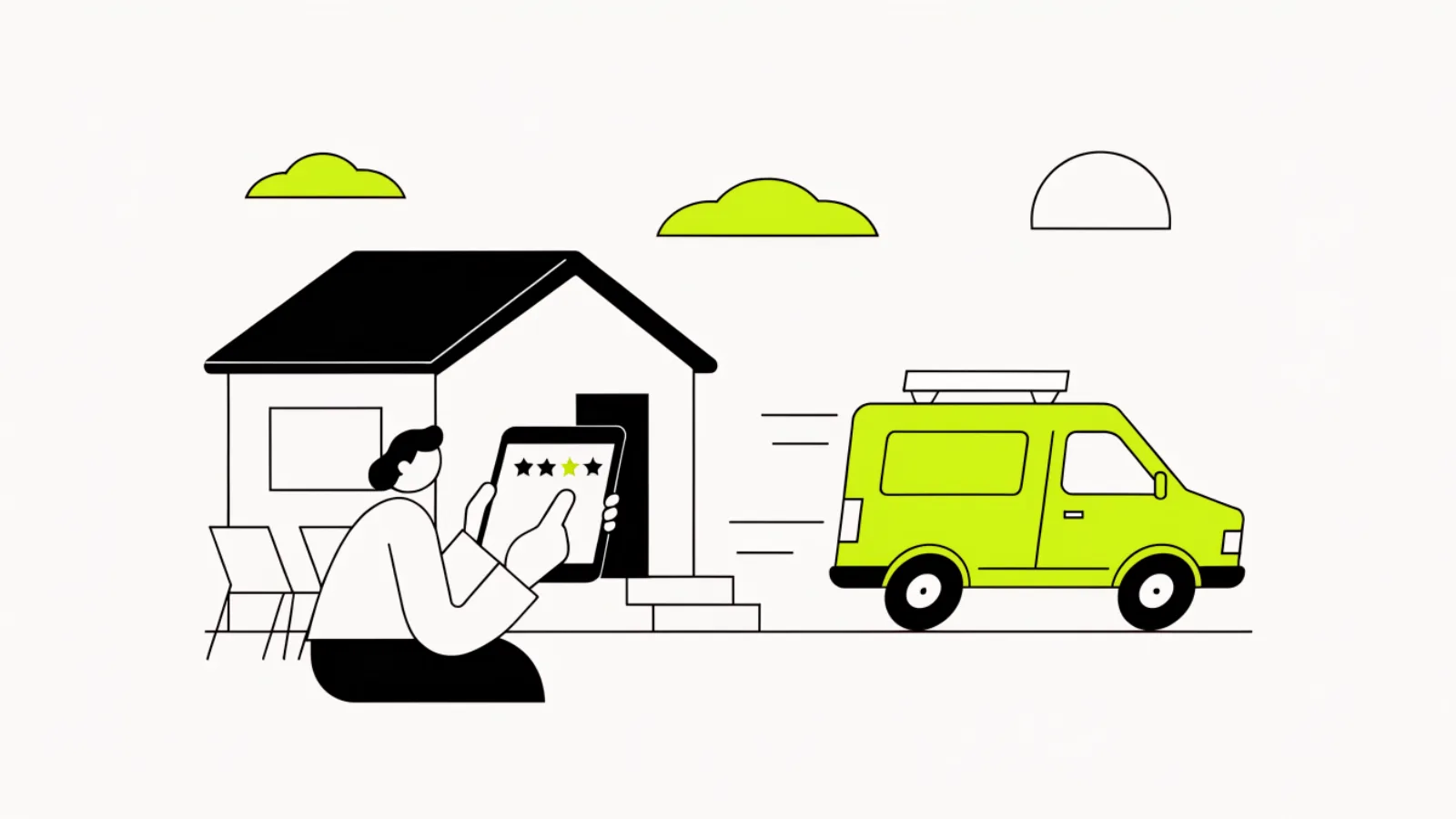
What’s the best way to ask a customer for a Google review?
Text them within two hours of finishing the job, from the tech or owner they met, with their name, one line about the work, and the direct review link. BrightLocal’s 2026 survey found 78% of consumers were asked for a review in the past year and 83% of those asked left one. The ask works; the timing and the link are what most shops get wrong. One text, one reminder three days later, then stop.
| What customers do (BrightLocal 2026, n=1,002) | Figure |
|---|---|
| Read reviews before choosing a local business | 97% |
| Were asked to leave a review in the past 12 months | 78% |
| Left a review when asked | 83% |
| Only trust reviews from the last 3 months | 74% |
| Won’t use a business with fewer than 20 reviews | 47% |
| Expect the owner to respond to reviews | 89% |
| Put off by templated owner replies | 50% |
When should the text go out?
The owner on r/smallbusiness who tested it said “the timing of when you ask matters more than how,” and the numbers back that up. The right moment is when the problem is visibly solved and the customer is still feeling it.
| Trade | Send the ask | Why |
|---|---|---|
| HVAC, plumbing, electrical repair | Same evening, 1–2 hours after the tech leaves | The house is cool, the water’s hot; relief is the review |
| Installs and replacements | 2–3 days later | Give them time to use it and see the bill was right |
| Roofing | The day after final walkthrough, or after the first rain | A roof is judged in rain |
| Lawn care, cleaning (recurring) | After the 3rd visit, then every 6 months | Recurring customers review once; ask when the habit’s formed |
| Any trade, after a complaint | Don’t. Fix it, then ask a month later if they’re happy | An ask after a problem reads as tone-deaf |
What do you say?
Under 200 characters, from a named person, with the link. No “we value your feedback.”
- The standard: “Hi Maria, it’s Dave from Lone Star Plumbing. Glad we got the water heater sorted today. If you’ve got a minute, a quick Google review helps a small shop like ours a lot: [link]”
- From the tech: “Hi Tom, it’s Luis, I did your panel today. If everything’s working right, would you mind leaving us a review? Takes about a minute: [link]. Thanks either way.”
- The reminder (day 3): “Hi Maria, Dave again. No pressure, just in case it got buried: [link]. Thanks for having us out.”
- Recurring customer: “Hi Dana, Priya at Fresh Start. Three cleans in, hope the place feels good. If you’re happy, a Google review would mean a lot: [link]”
- The unhappy-customer check first: “Hi Karen, Joe at Red River Roofing. Before anything else, is everything right with the roof after the rain? Reply here if not and I’ll come out.”
That last one goes out to everyone before the review ask. Anyone who replies with a problem is pulled out of the review sequence and into a task for you. That’s not review gating (see below); it’s customer service, and it’s also why the reviews you do get are five stars.
What are you allowed to do?
- Ask everyone. Google’s policy and the FTC’s 2024 rule on fake reviews both prohibit “review gating”: sending happy customers to Google and unhappy ones to a private form. Ask every customer the same way; a service check-in before the ask is fine, as long as everyone still gets the ask.
- No incentives. No discount, gift card or entry for a review. The FTC rule carries civil penalties and Google removes incentivised reviews.
- Use the direct link. Google Business Profile gives you a short review link. Put it in the text; a link to your website that then links to Google loses half the people.
- One reminder, then stop. Two asks total. A third reads as nagging and costs you the review and sometimes the customer.
- Reply to every review within a week. 89% expect it; 81% expect a reply inside seven days. Write a real sentence about their job, not a template; half of consumers are put off by templated replies.
- Texas: a review request after a job you did is a reply to an existing customer relationship, not a solicitation, but send it 9 a.m.–9 p.m. and from your registered business number.
Why do customers ignore review requests?
A local SEO owner on r/localseo said the surprise with his automated requests was that “people just ignore them.” Four reasons, in order: the text came from a short code or a company name instead of a person; it came days late; the link was to a page, not the review box; and it was the same text everyone sends. Fix those four and the 83% figure is reachable; most shops asking by hand sit around 20%.
Questions owners ask
Text or email?
Text first; it gets read in minutes. Email as the day-3 reminder if you have it.
Can I ask only the happy customers?
No. That’s review gating and both Google and the FTC prohibit it. Ask everyone; do a service check first.
Can I offer a discount for a review?
No. Incentivised reviews break Google’s policy and the FTC’s 2024 rule.
How many reviews do I need?
47% of consumers won’t use a business with fewer than 20. After that, recency matters more than count: 74% only trust the last three months.
Should the tech send it or the office?
The tech’s name, sent by the system. The customer met the tech, not the office.
What if I get a bad review?
Reply within a day, specific and calm, offer to fix it offline. Readers judge the reply more than the review.
Can I automate this from Jobber, Housecall Pro or ServiceTitan?
Yes. “Job completed” triggers the check-in and the ask. Most clients run it through GoHighLevel so the texts come from the tech’s name.
Yelp too?
Yelp discourages asking at all and filters reviews it thinks were solicited. Ask for Google; let Yelp happen.
How do big companies get hundreds of reviews fast?
Volume plus the same automated ask after every job. Some buy them; those get removed and penalised.
How often should I reply to reviews?
Every one, within a week, with a sentence about their actual job.
Next pages
Sources
- BrightLocal, “Local Consumer Review Survey 2026,” published 11 Feb 2026, updated 14 Sep 2026, 1,002 US consumers: brightlocal.com
- Owner threads: r/smallbusiness, r/ProHVACR
Want the ask sent after every job, in your tech’s name?
Thirty minutes on Central Time. We connect “job completed” to the check-in and the ask, write the texts in your words, and you watch the review count move.